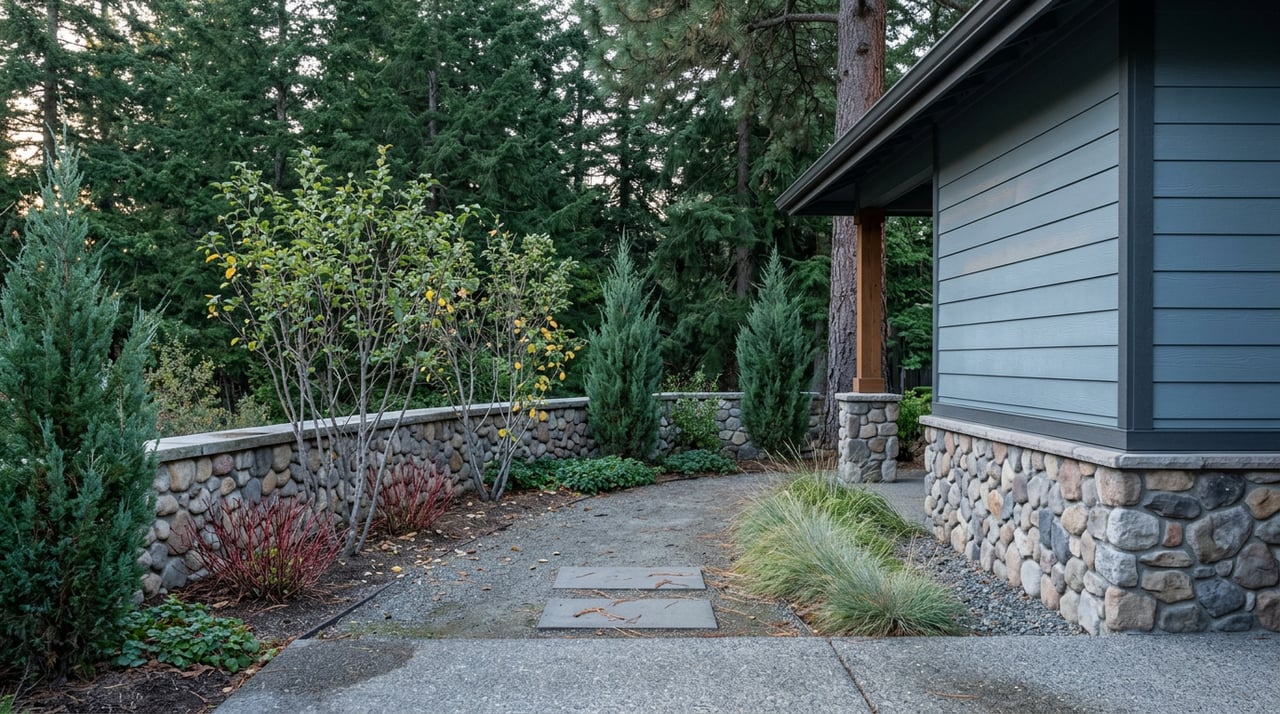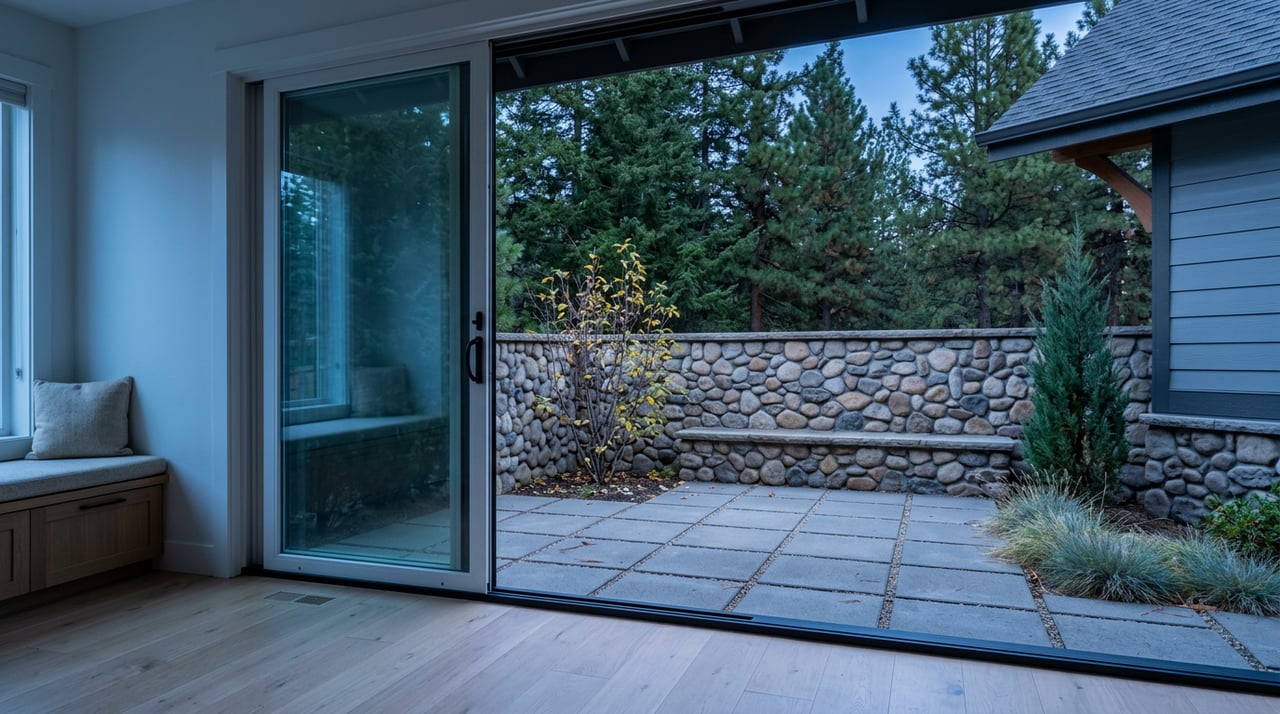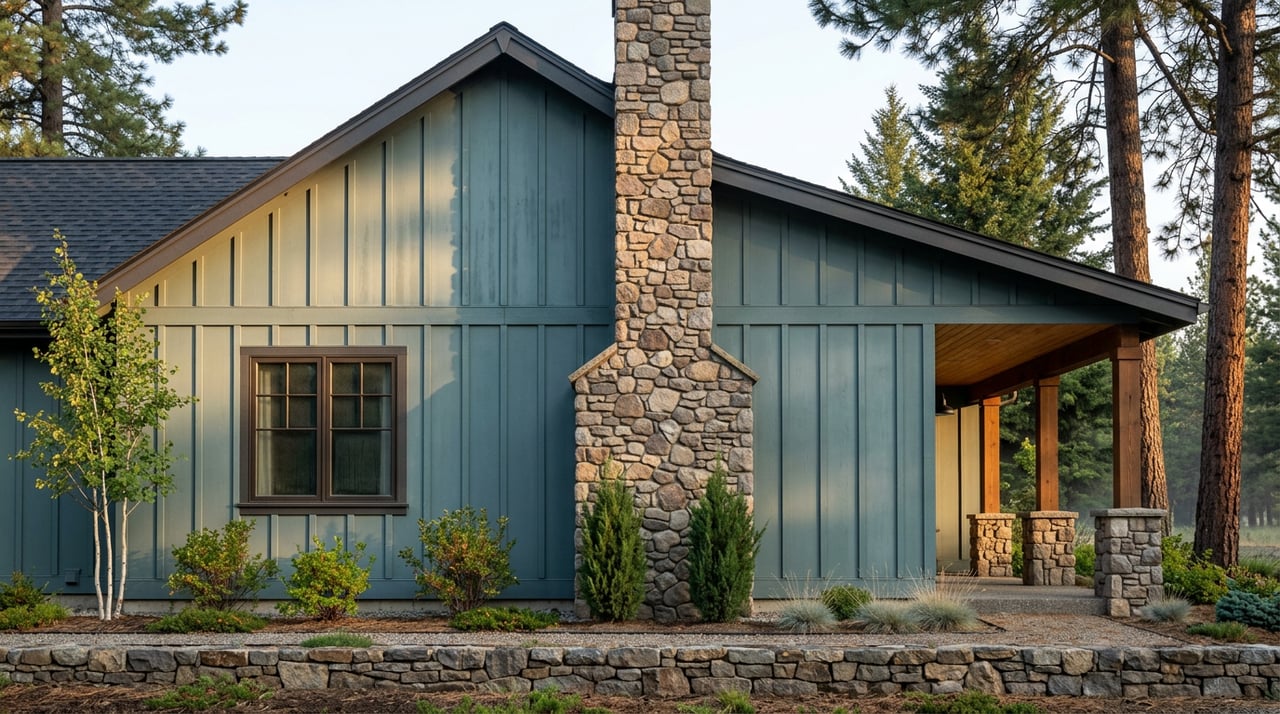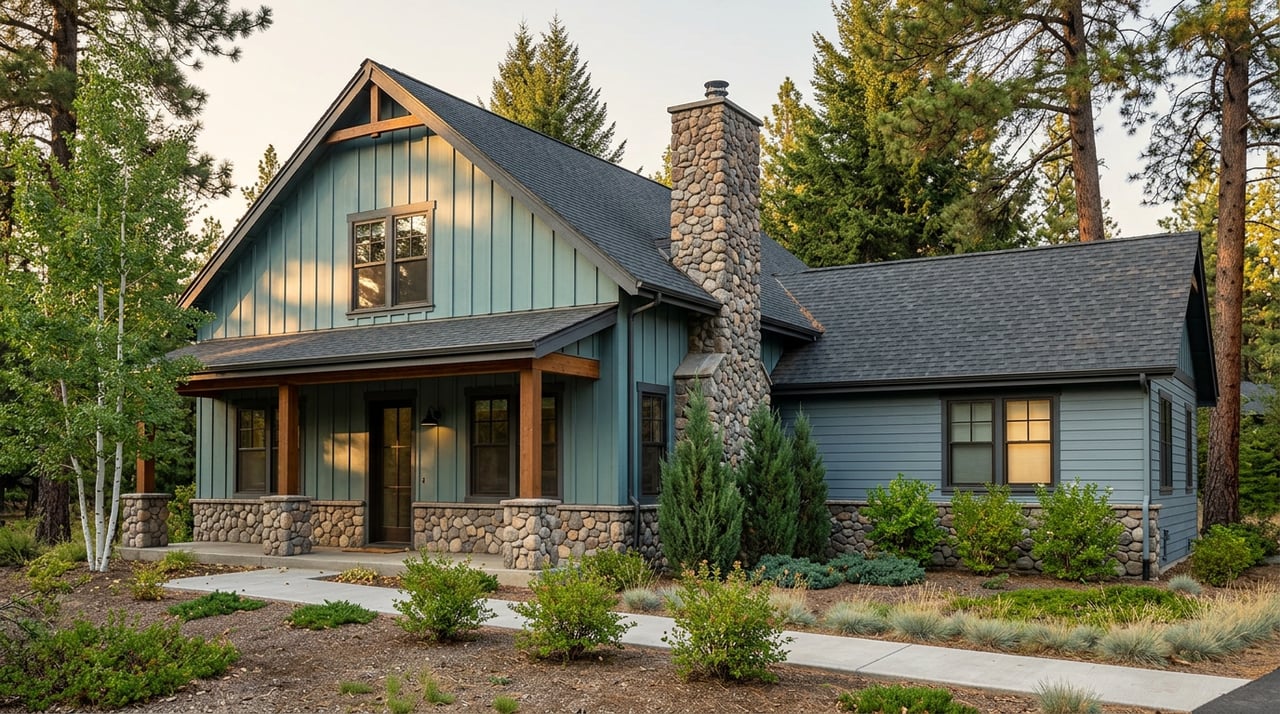
Open any portal and Missoula looks like an $897,000 market. Pull the closing data and it looks like a $549,000 market. Both numbers are real, both are current, and the space between them is where most build-versus-buy decisions get made on bad information.
If you are weighing a resale in town against a custom build on a Phase 9-11 estate or cottage lot at Canyon River, the gap deserves a closer read than it usually gets.
The gap that isn't a discount
As of July 2026, Missoula shows 34 active listings against 23 pending sales, with a median sold price of $549,250 across 632 closings over the trailing six months and a median asking price of $897,000 on what is currently for sale. The active pool sits at a four-day median age.
A $348,000 spread looks like leverage. It is not. The active pool and the sold pool are not made of the same houses. Today's inventory skews toward larger, newer, and pricier product because entry-level homes clear in days. The gap is a composition story, not a negotiation story.
Redfin's three-month window ending May 2026 confirms the shape from a different angle, with a median sale price of $547,000, 61 days on market, and 238 May closings, up from 185 a year earlier. Zillow's Home Value Index for Missoula was $576,303 as of June 30, 2026, a 0.9 percent one-year change. Three sources, three methods, one range roughly $547K to $576K. That is your benchmark. Not $897K.
The 2026 Five Valleys Housing Report from the Missoula Organization of Realtors put the 2025 area median at $550,000, down 2.2 percent, on 1,029 sales, a 4.6 percent year-over-year lift. Supply has moved into what Windermere's Brint Wahlberg described at the report presentation as the healthy three-to-nine-month range, and Mandy Snook of Montana Home & Land Company noted that lower rates and, in some cases, lower property taxes have widened buyer choice.
What actually clears at $549K in Missoula
The middle half of the last six months of closings landed between roughly $445,000 and $715,000. That is the honest opportunity set for a resale buyer who wants something already built. It buys mid-size, mid-vintage inventory across the valley, generally without river frontage, generally without golf-course adjacency, and generally without the finish package a Canyon River buyer is picturing.
The homes clearing above the $715,000 upper-quartile line are the ones a Phase 9-11 buyer is actually competing with. And those are the listings sitting closer to the $897,000 ask side of the ledger, which is precisely why the ask median looks the way it does.
So the real comparison is not "$549K resale vs. Phase 9-11 build." It is "$715K-plus resale of unknown vintage vs. Phase 9-11 build of known specification." That reframes the arithmetic.
What a Phase 9-11 build actually pencils to
National 2026 construction cost surveys put production and semi-custom builds at $175 to $320 per square foot and true custom homes at $300 to $600-plus per square foot, with the NAHB's April 2025 tariff survey estimating roughly a $10,900 per-home cost effect from recent tariff actions on top of that. Montana-specific 2026 guidance from Houzeo puts a custom Montana home at $400,000 to $600,000 in construction cost, or $150 to $250 per square foot before land, with typical build timelines of nine to twelve months.
For a Phase 9-11 buyer, the useful cut of that data looks like this.
| Build tier | Hard cost per sq ft | 2,200 sq ft cottage plan | 3,000 sq ft estate plan |
|---|---|---|---|
| Semi-custom, mountain-region typical | $250 to $320 | $550K to $704K | $750K to $960K |
| Full custom, higher finish | $320 to $450 | $704K to $990K | $960K to $1.35M |
| Luxury custom | $450 to $600+ | $990K to $1.32M+ | $1.35M to $1.8M+ |
Those numbers exclude the lot and exclude the 15 percent contingency most planners carry. Hard construction is typically 60 to 70 percent of the all-in budget once land, permits, design, and financing are layered on.
The insight is not that building is cheaper or more expensive than buying. It is that a semi-custom Phase 9-11 build lands in the same price band as the upper-quartile resale you were actually going to compete for anyway, with the difference being specification control and a known delivery date rather than an unknown remodel scope.
The friction resale buyers keep underestimating
A four-day median listing age is the number that quietly rearranges everything. Under those conditions, a resale buyer is committing to an inspection, an appraisal, and a financing contingency on a house they toured once, often after writing an escalation clause the same evening. Any renovation the property needs to actually match the Canyon River finish level gets priced into that offer under time pressure, with contractor bids that were not real bids.
A build shifts the friction. You trade speed at the front for control in the middle. The nine-to-twelve-month timeline is real, and lumber cost volatility from ongoing softwood duties is real, but so is the ability to specify the great-room fireplace, the window package, and the mudroom layout before the concrete is poured rather than after you close.
Snook's remark at the MOR presentation about the market's "lack of usable inventory in the lowest price bands" cuts the other direction too. Usable inventory is scarce in the upper bands as well, if usable means "already finished to the specification a mountain-modern buyer expects." That is the friction a build sidesteps.
The rental floor underneath the decision
For Phase 9-11 buyers considering a second home or a hold strategy, the rental picture matters. Josh Plum of Plum Property Management reported that two-bedroom apartment rents rose 11.4 percent last year to an average $1,661, one-bedrooms rose 5.4 percent, and three-bedroom single-family rentals stabilized. Higher-end one- and two-bedroom units in the $1,800 to $2,500 range are leasing more slowly, with tenants showing clear price sensitivity even when higher rents include utilities and amenities.
Read that as a floor, not a ceiling. The three-bedroom single-family segment is the one that stabilized, which is the segment closest to a Canyon River cottage-plan build. The University of Montana anchors durable rental demand, but the amenity premium a Canyon River home commands is a lifestyle-sale premium, not an obvious rent premium.
How to benchmark a Phase 9-11 lot honestly
- Anchor your resale comparison to the $547K to $576K sold-side median range, not the $897K ask.
- Then step up to the upper-quartile line near $715K. That is the actual pool of resale homes with the square footage and finish level a Phase 9-11 buyer would accept.
- Price the Phase 9-11 build at $250 to $320 per square foot for semi-custom and $320-plus for full custom, plus lot, plus a 15 percent contingency, plus roughly $11,000 for current tariff drag on materials.
- Compare total delivered cost, not per-square-foot cost. A resale at $700K that needs $150K of finish work to match a new build is a $850K project on a ten-year-old envelope.
- Weight the four-day DOM friction. The build has schedule risk. The resale has decision-quality risk. Choose the risk you can manage.
Short FAQ
Is the $897K asking median a sign sellers are overpricing? Not on its own. A wide ask-to-sold gap usually reflects a different mix of homes on the market than what closed, not a broad seller misread. Anchor to closed comps.
How long should I budget for a Phase 9-11 build? Montana custom builds typically run nine to twelve months once permits clear, with short mountain construction seasons and specialty-trade scheduling as the two most common causes of overrun.
Does the recent inventory increase change the build case? It softens urgency on the resale side without changing the build math. Supply moving into the three-to-nine-month range means resale shoppers can look longer, but it does not compress construction cost per square foot.
Ready to compare your build budget against what Missoula is actually closing? Canyon River Properties can walk you through the Phase 9-11 lot inventory, preferred-builder plans, and current pricing side by side with the resale comps that matter. Start Your Canyon River Story.