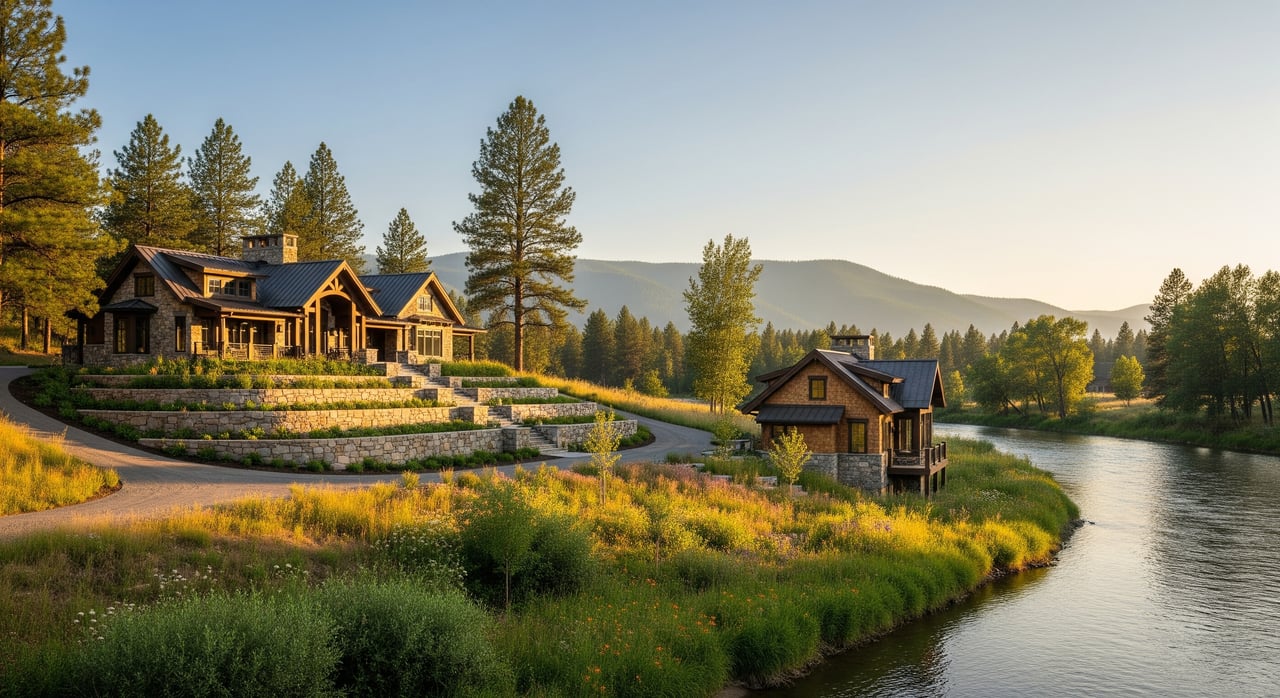
Trying to decide between an estate lot and a cottage lot at Canyon River? You are not alone. The right choice comes down to how you want to live, what you plan to build, and how you want to manage cost and maintenance over time. In this guide, you will learn how these lot types typically differ, the Missoula factors that matter most, and a simple checklist to compare options with confidence. Let’s dive in.
What “estate” and “cottage” usually mean
Every community defines these terms a little differently, so always verify the exact standards for Canyon River with the developer and HOA documents. That said, here is how these categories typically break down in the Missoula area:
Estate lots, in general
- Larger acreage, often one acre or more.
- Bigger build areas, room for outbuildings or a shop, and greater setbacks for privacy.
- Sometimes more flexibility in home design, while still respecting view corridors and site planning standards.
- Higher one-time site costs are possible, like longer driveways and utility extensions. Some projects use private wells or septic if public services are not available, so confirm specifics before you buy.
Cottage lots, in general
- Smaller lots, commonly under half an acre in many developments.
- Emphasis on efficient footprint, front porches, tighter setbacks, and lower-maintenance yards.
- Design guidelines are often more prescriptive to keep a cohesive streetscape.
- Site-work costs can be lower, though HOA dues may cover more shared amenities or maintenance.
Typical differences at a glance
The points below reflect common distinctions in similar Western Montana neighborhoods. Use them as a starting framework, then verify the Canyon River standards, services, and fees for the specific phase and lot you are considering.
| Factor | Estate Lots (typical) | Cottage Lots (typical) |
|---|---|---|
| Lot size | Larger, often 1+ acres | Smaller, often under 0.5 acre |
| Privacy & setbacks | Greater distance from neighbors | Closer spacing, walkable blocks |
| Home size & style | Larger envelopes, more site flexibility | Compact footprints, cohesive streetscape |
| Outbuildings | Often allowed with guidelines | Often limited or restricted |
| Utilities | May require longer extensions, some areas use well/septic | Often closer to services, shared infrastructure more common |
| Site-work cost | Can be higher for driveway, grading, utilities | Typically lower per lot |
| Maintenance | More landscaping and snow to manage | Lower yard maintenance |
| Ideal fit | Space for hobbies, shop, gardens, privacy | Lock-and-leave feel, simpler upkeep |
Start with your lifestyle
Think about how you will use the property week to week.
- If you want room for a workshop, larger garage capacity, or expansive landscaping, an estate lot often fits.
- If you want a simpler footprint with easier upkeep and a neighborhood feel, a cottage lot may be the better path.
- If views and quiet matter most, spacing on an estate lot can help. If daily convenience matters more, a smaller lot closer to shared amenities can be appealing.
Missoula build factors to plan for
Building in and around 59802 means paying attention to local site conditions and permitting. These items often influence cost, design, and timeline.
- Foundations and frost: Montana winters call for proper foundation depth and frost protection as required by local building codes.
- Drainage and stormwater: Confirm whether you will use an approved subdivision plan or provide a lot-specific plan during permitting.
- Utilities: Verify who provides electric and gas and whether water and sewer are public or private. If any lots in your target area require wells or septic, talk to the health department about tests and setbacks.
- Driveways and access: Longer or steeper driveways can raise costs and affect winter access. Confirm required grades and surfacing in community guidelines.
- Wildfire and WUI: If a lot falls within a wildfire risk zone, check for defensible-space requirements and recommended building materials.
- Energy code: New homes must meet current energy standards. Plan design choices and budgets accordingly.
HOA, CC&Rs, and design rules to review
Before you make a short list, get the recorded CC&Rs and any architectural guidelines for the phase.
- Minimum and maximum home size, garage orientation, and exterior materials.
- Color palette and roofing standards.
- Rules on fencing, trees, and landscaping.
- Accessory buildings, ADUs, and shop allowances.
- Short-term rental restrictions and home-business policies.
- HOA fees and what they cover, such as road maintenance, snow removal, irrigation systems, stormwater, or common-area upkeep.
Cottage sections often have tighter design controls to keep a consistent streetscape. Estate sections may allow more flexibility but still enforce siting standards to protect views and neighborhood quality. Verify the exact rules for your lot type and phase.
Cost and financing: what to expect
Your total budget includes the lot, site work, utilities, and the home itself. The path you choose can shape your financing and carrying costs.
- Lot-only vs construction-to-perm loans: Lenders treat land differently than finished homes. Lot loans can require larger down payments and higher rates. Many buyers use a construction-to-permanent loan for a one-close solution when they are ready to build.
- Infrastructure and timing: If roads or utilities are not fully complete or accepted by the local jurisdiction for a specific phase, some lenders may pause financing. Confirm readiness before you write an offer.
- Utilities and tap fees: Check connection fees and whether any line extensions are on you. Estate lots with longer runs can add cost.
- Septic or well: If a lot depends on on-site systems, expect permitting steps and potential schedule impacts. This can also affect underwriting and appraisal.
- Taxes and assessments: Review estimated property taxes and any special assessments tied to the subdivision.
Resale and demand in 59802
In and around 59802, buyers include outdoor enthusiasts, university-affiliated households, and move-up or downsizing locals. Smaller, efficiently designed homes can command higher price per square foot, especially in amenity-led neighborhoods. Estate parcels often attract buyers who value acreage and privacy, which can create a different kind of premium. To gauge value in Canyon River, compare recent sales for similar homes and lot types in the immediate area and in comparable communities.
A buyer’s checklist for Canyon River
Use this list to compare specific lots and keep your due diligence organized.
- Confirm how the developer defines estate vs cottage in your phase, including minimum lot sizes and any special standards.
- Review recorded CC&Rs and current architectural guidelines. Note any differences by lot type.
- Verify utility availability for the lot, including water, sewer, electricity, gas, and internet. Ask about tap fees and any line-extension costs.
- If septic or wells are involved for any lots you are considering, ask about soils reports, perc tests, and required setbacks.
- Check floodplain status through official maps and ask about drainage patterns on and near the lot.
- Ask the local fire district about wildfire risk classification and any required mitigation. Budget for defensible space if needed.
- Review slope, soils, and access. Walk the lot after rain or snow to observe drainage and driveway feasibility.
- Clarify who maintains roads and at what point responsibility transfers to the HOA or public agency.
- Identify any easements, open-space buffers, or view corridors that affect build envelope or privacy.
- Visit at different times of day to assess light, noise, and activity from nearby phases or amenities.
- Discuss your goals with a local builder. Get rough estimates for site work, foundations, and utilities for your specific lot type.
How we can help
Canyon River is known for outdoor living, community amenities, and quality design. Choosing between estate and cottage lots is easier when you have local guidance that connects the dots between CC&Rs, utilities, builders, and financing. Our team helps you shortlist the right lots, interpret the neighborhood rules, and match you with trusted builders so you can move from concept to contract with confidence.
Ready to compare lots, review guidelines, and plan your build path? Reach out to Stephanie Nelson to start a focused, step-by-step process that fits your budget, timing, and lifestyle.
FAQs
What is the difference between estate and cottage lots at Canyon River?
- Definitions vary by phase, but estate lots are typically larger with more privacy and potential for outbuildings, while cottage lots are smaller, lower maintenance, and follow more cohesive streetscape guidelines. Always verify the exact standards for your target lot.
How do utilities differ between estate and cottage lots in Missoula?
- Utility setups depend on the specific phase. Some areas use public water and sewer, while others may require wells and septic. Confirm availability, tap fees, and any line-extension costs before you write an offer.
What extra site costs should I plan for on an estate lot?
- Longer driveways, grading, possible utility extensions, and potential well or septic systems can add to one-time costs. A builder can help estimate these line items for your exact lot.
Are HOA rules usually different for cottage lots?
- Many cottage sections use more prescriptive design standards to maintain a cohesive look. Estate sections can allow more flexibility while still protecting neighborhood quality. Review the CC&Rs and architectural guidelines for your lot.
How do lenders approach land and new construction in 59802?
- Lot-only loans often have higher rates and larger down payments. Many buyers use a construction-to-permanent loan once they are ready to build. Lenders may require completed infrastructure and recorded approvals before funding.
How does wildfire risk affect building near Canyon River?
- If a property falls within a wildfire risk zone, plan for defensible space and consider ember-resistant materials. Requirements and recommendations vary by location, so check with the local fire district during due diligence.